Research & product design
Humans
A platform that helps you spot your own hidden biases, and learn how to challenge them.
- 01 IntroductionTwo psychology professors wanted a better way to explore our hidden biases.
- 02 The vibeOld VHS covers meet strict Swiss poster grids.
- 03 AMPA focus point, a priming image, a mask and a target, all in a split second.
- 04 User testingTen people showed us what it takes before anyone will look at their own biases.
- 05 ConclusionThe professors were thrilled. It was far more than they'd expected.
Case study
A platform that helps you spot your own hidden biases, and learn how to challenge them.
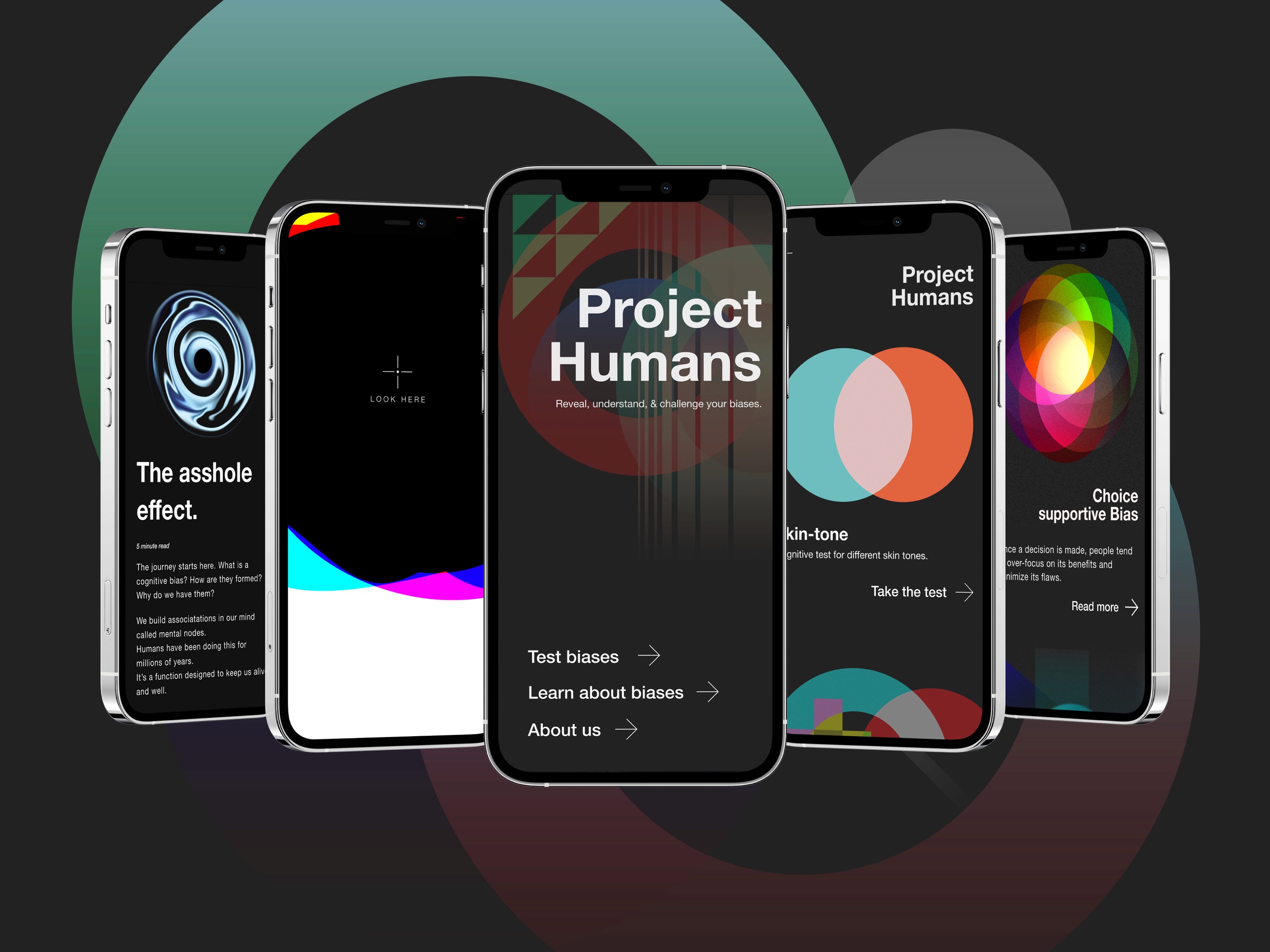
Introduction
01
Two psychology professors wanted a better way to explore our hidden biases.
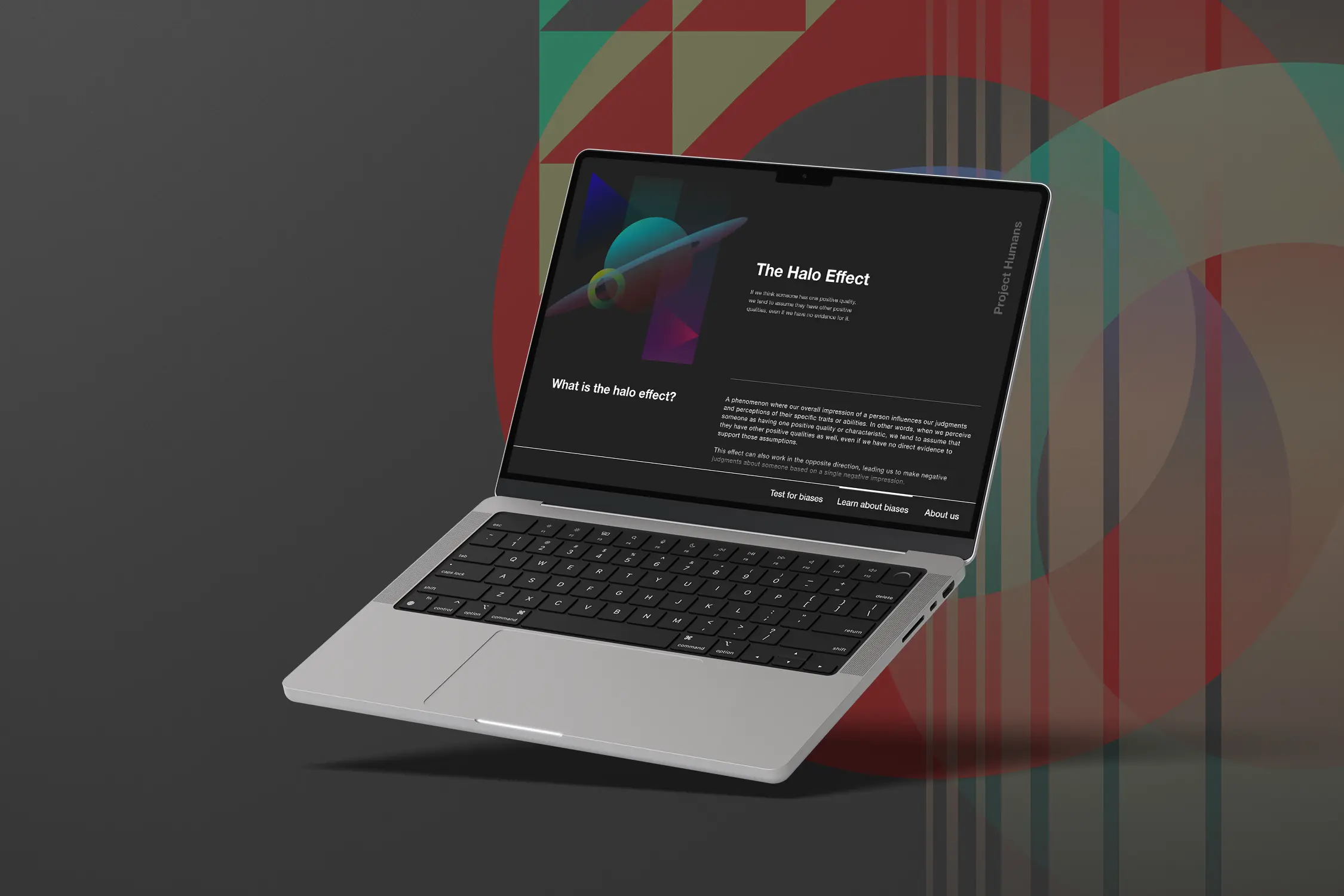
I teamed up with two psychology professors at Uppsala University. My job was to research, design and test a new product for the web and phones, built on a well-established test called the affect misattribution procedure (AMP).
Early on, we talked a lot about where bias testing falls short, and about what we saw as real problems with the best-known one, the implicit association test (IAT). I turned all that into a code of ethics for the platform to be built on.
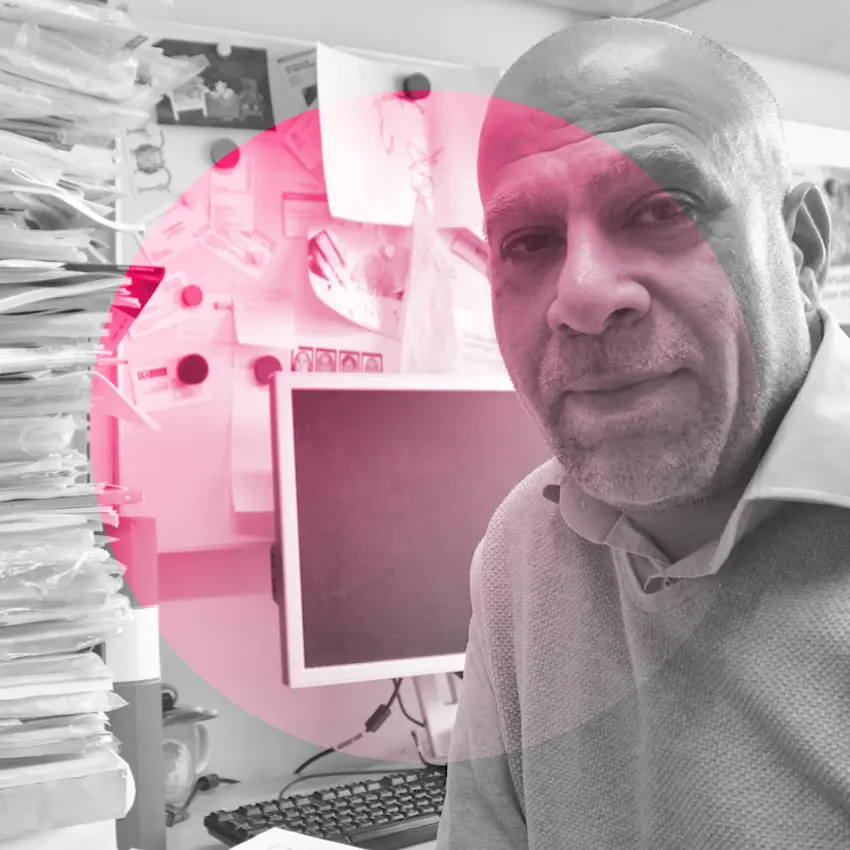

Nazar Akrami & Robin Bergh, associate professors of psychology at Uppsala University.
Collaborators
They kept a close eye on the test method, its timing, the images and the articles.
The vibe
02
Old VHS covers meet strict Swiss poster grids.
I wanted it to feel timeless.
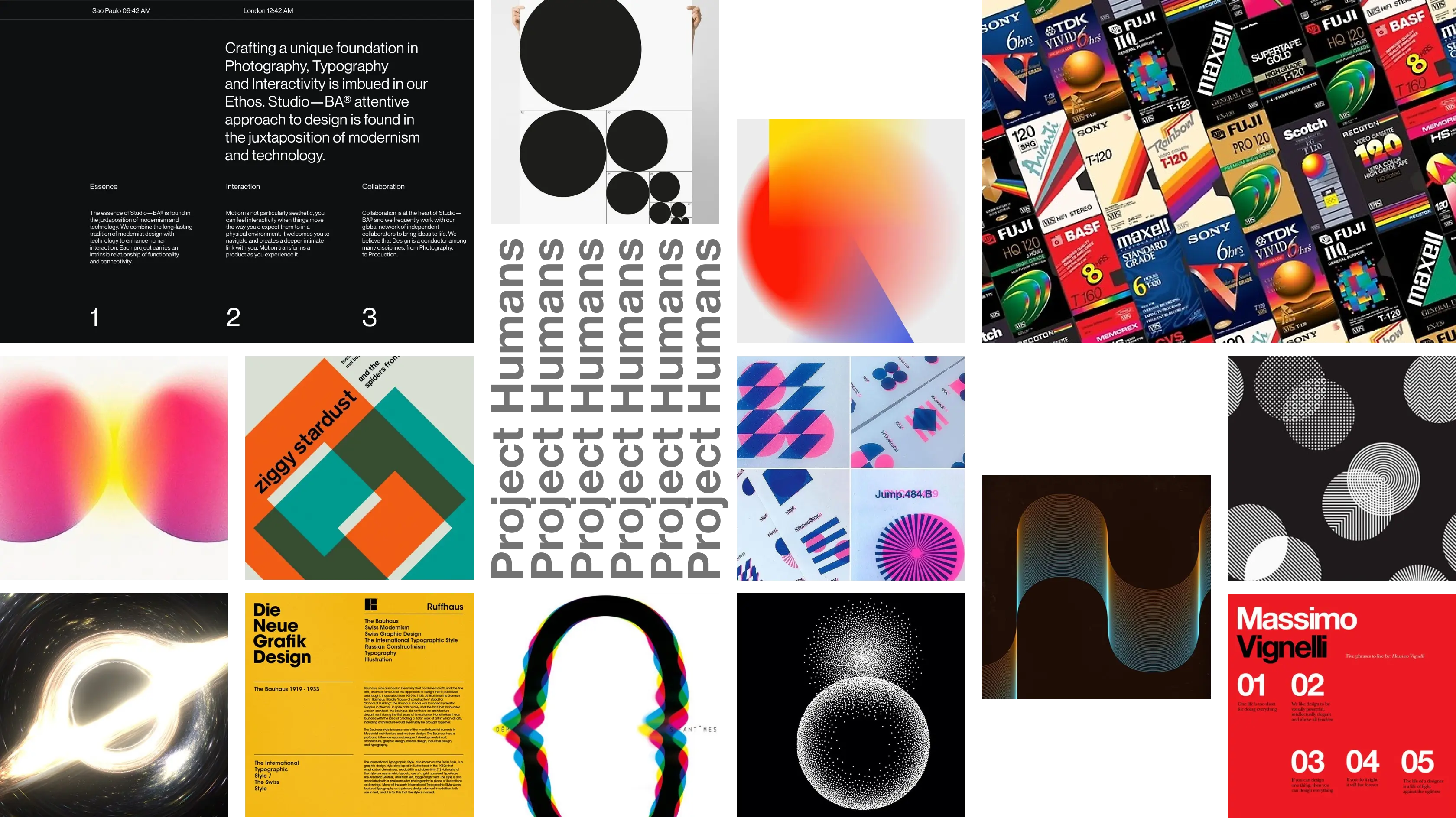
Moodboard.
Illustrations
I drew a lot of illustrations: one for each bias the articles cover, plus some for the brand.
Illustrations






AMP
03
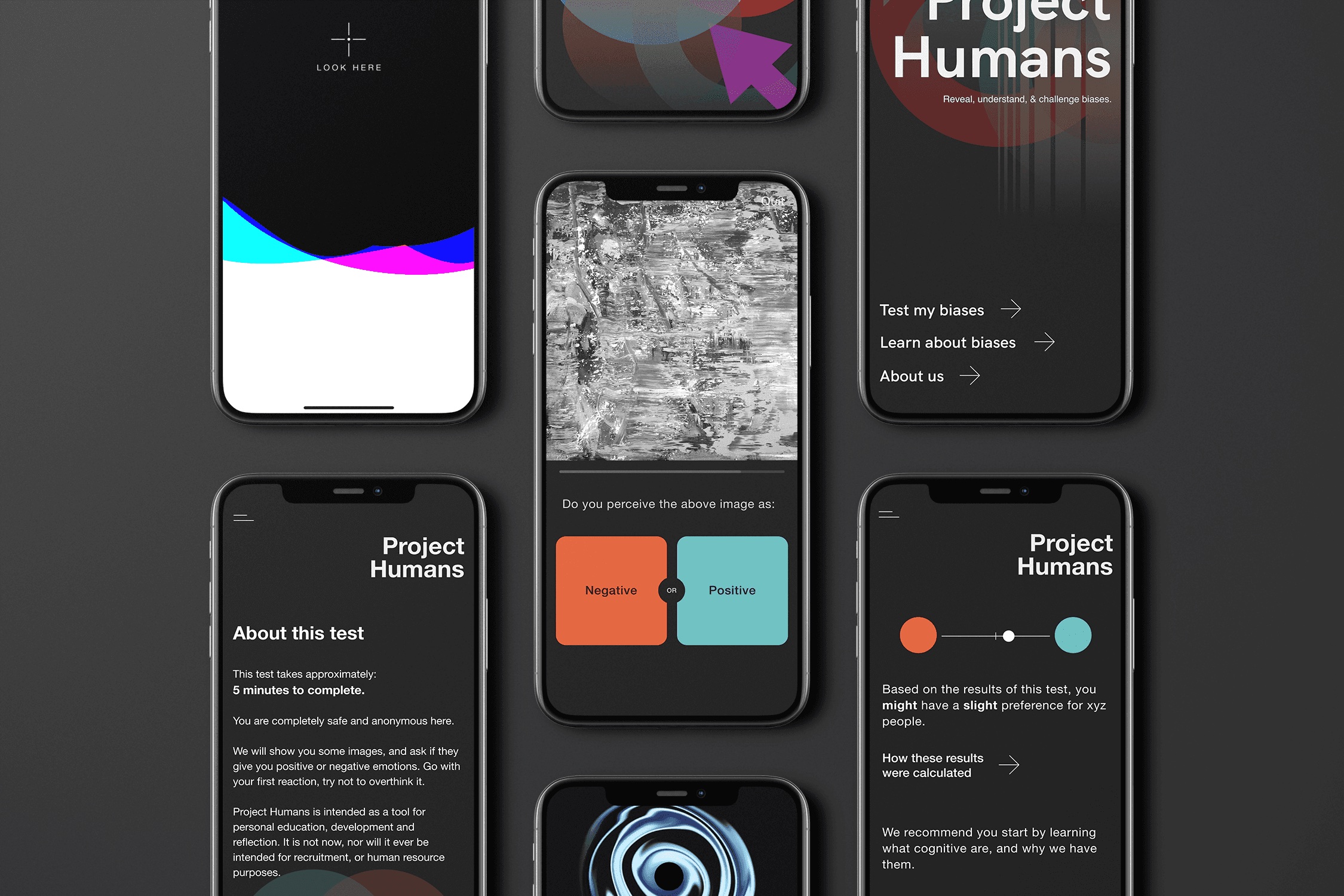
A focus point, a priming image, a mask and a target, all in a split second.
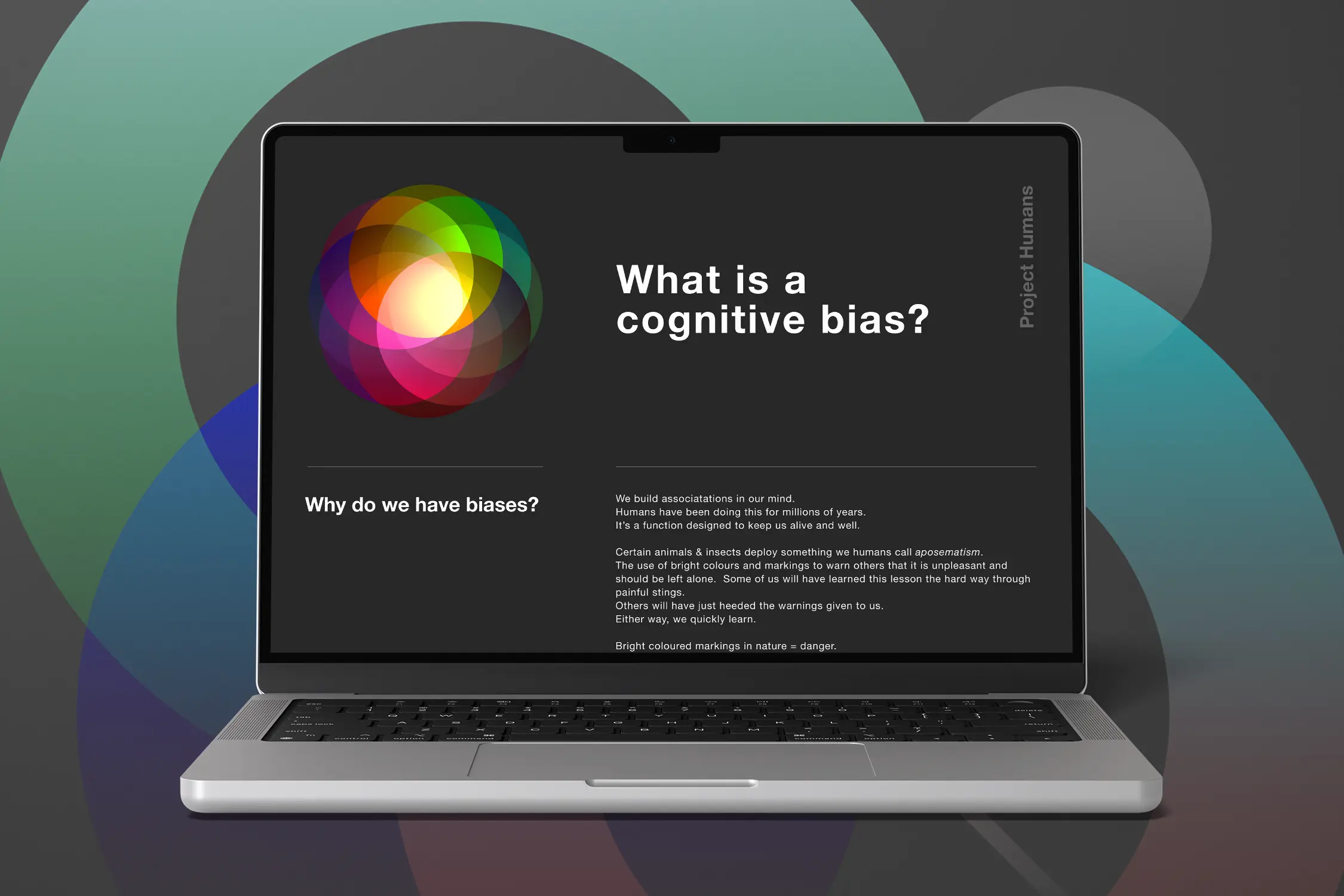
After about 50 rounds, a bias may start to show. At the end you see your results and, most importantly, some reading to help make sense of them.
The product
User testing
04
Ten people showed us what it takes before anyone will look at their own biases.
We tested a rough but fully working prototype with 10 people. We picked people with a growth mindset who'd said they were into self-improvement. They taught us to put these first:
Feeling safe and anonymous.
Seeing the professors behind it.
Learning, not judgement.
Conclusion
05
The professors were thrilled. It was far more than they'd expected.
We used what we learned in testing to improve the product.
The project wrapped up well. Last time we spoke, they were looking for someone to build it.